2022 Year in Review: Intellectual Property Law and the Supreme Court

2022 Year in Review: Intellectual Property Law and the Supreme Court

2022 was a quiet year for the Supreme Court in terms of intellectual property (IP) rulings.

The Lone Opinion

Unicolors, Inc. v. H&M Hennes & Mauritz LP: In the only IP-related petition to obtain an issued ruling in 2022, the Supreme Court helped copyright holders avoid invalidation of their copyrights due to inadvertent mistakes in their copyright applications.

Under a provision of the 2008 PRO-IP Act, the Ninth Circuit reversed a nearly $800,000 infringement verdict because it found that Unicolors’ copyright registrations included errors, which the court found Unicolors knew were inaccurate. The Supreme Court reversed the Ninth Circuit’s ruling and sided with Unicolors’ argument that inadvertent legal misunderstandings were not the type of inaccuracies with which the law was concerned.

The Supreme Court noted that “it would make no sense if [the law] left copyright registrations exposed to invalidation based on applicants’ good-faith misunderstandings of the details of copyright law.” The Supreme Court then held that because the Copyright Act does not distinguish between a mistake of law and a mistake of fact, “[l]ack of knowledge of either fact or law can excuse an inaccuracy in a copyright registration.”

Although articulating this safe harbor for copyright holders, the Supreme Court was clear to mention that the safe harbor does not apply if there is evidence demonstrating that the copyright owner actually knew it submitted legally inaccurate information or was willfully blind to the fact. The opinion also notes that an applicant’s experience with copyright law can serve as evidence that they were aware of the legal errors in the filing.

Due to these carve outs in the safe harbor, it is likely courts will apply the safe harbor differently depending on the identity of the copyright applicant. Consequently, a court is likely to apply the safe harbor most liberally where the applicant is an individual author or artist with no prior copyright experience filing their own application, and apply it most strictly where the application is filed by an attorney specializing in copyright law.

What Could Have Been

The lack of substantive opinions from the Supreme Court in 2022 was not due to a lack of petitions. Rather, the Supreme Court declined to hear at least 30 petitions, which involved one or more issues concerning copyright, trademark, patent or trade secret law. Patent law led the charge in 2022 with at least 25 petitions posing patent specific questions. The following are a few of the issues the Supreme Court declined to tackle in 2022.

State Sovereign Immunity and Copyright Infringement: The Supreme Court declined to hear the case of Jim Olive Photography v. University of Houston System in which a photographer sought review of a Texas Supreme Court decision upholding state sovereign immunity to damage claims stemming from the University’s unlicensed use of a copyrighted photo. The photographer sought damages on the theory that appropriation of the photographer’s right to exclude constituted a per se taking by a government entity. The Texas Supreme Court disagreed, holding that there is no taking where the photographer retained the copyright in the photo, and was still free to license it or sell it to others.

As it stands now, despite recent challenges to state sovereign immunity, a copyright holder’s only remedy against a state actor remains injunctive relief.

Patent Eligibility: The Supreme Court declined to hear five petitions, all of which raised issues concerning patent eligibility or application of the Supreme Court’s 2014 ruling in Alice v. CLS Bank.

American Axle & Manufacturing Inc. v. Neapco Holdings LLC was one of the more highly-anticipated petitions pending before the Supreme Court in 2022. Filed in 2020, the petition in American Axle sought review of the Federal Circuit’s 2019 ruling that American Axle’s method to reduce noise and vibrations through the insertion of a liner in its driveshaft was not eligible for patent protection because the process amounted to nothing more than an application of natural law to a complex system.

In 2021, the Supreme Court requested comment from the Solicitor General. The Solicitor General recommended that the Supreme Court hear the issue and provide guidance that could clarify the Supreme Court’s prior rulings in Mayo v. Prometheus (2012) and Alice (2014), which collectively held that laws of nature and abstract ideas are not eligible for patent protection. Despite the Solicitor General’s recommendation, in June, the Supreme Court ultimately declined to hear the appeal. Around the same time, the Supreme Court also declined to grant certiorari in two other cases—Spireon Inc. v. Procon Analytics LLC and Ameranth Inc. v. Olo Inc.—involving issues nearly identical to those in American Axle.

The petition in Yu v. Apple asked the Supreme Court to resolve whether, when applying the test for patent eligibility, a patent claim should be considered “as a whole” or, instead, its “point of novelty” should be determined after all conventional elements of the patent claim have been disregarded. The petition in Yu, which stemmed from Judge Newman’s dissent in the Federal Circuit’s split panel decision, seemed like the perfect vehicle to address the patent eligibility doctrine.

The case of Worlds Inc. v. Activision Blizzard, Inc. involved a petition requesting that the Supreme Court articulate what the appropriate standard is for determining whether a patent is “directed to” a patent-ineligible concept under step one of the Alice two-step framework for determining whether an invention is eligible for patenting under 35 U.S.C. § 101.

For now, given the Supreme Court’s reluctance to revisit its prior precedent, patent practitioners and inventors are left to navigate the continually challenging and uncertain world that is patent eligibility under 35 U.S.C. § 101.

Patent Litigation and Preclusion: Another patent case the Supreme Court declined to hear was PersonalWeb Technologies, LLC v. Patreon Inc., which sought review of the Federal Circuit’s application of the Kessler Doctrine. The Kessler Doctrine precludes a patent holder from later asserting claims against customers of a seller following a failed suit against the seller on invalidity and/or infringement grounds. However, in PersonalWeb, the patent holder voluntarily dismissed litigation against Amazon following a narrow claim construction only to file subsequent litigation against Amazon’s customers. The Federal Circuit applied the Kessler Doctrine and held that the patent holder was precluded from maintaining its suit against Amazon’s customers.

Although PersonalWeb involves a unique set of facts, the Federal Circuit’s apparent expansion of the Kessler Doctrine is a valuable reminder to patent holders to consider and evaluate their patent enforcement strategy, particularly if it requires separate litigation against a seller and its customers.

After Michigan Supreme Court redefines ‘sex,’ Catholic school lawsuit warns of broad impact

After Michigan Supreme Court redefines ‘sex,’ Catholic school lawsuit warns of broad impact

Presented the new comprehension of “sex,” equally civil rights regulation and penal law “impose significant burdens on Sacred Heart and force it to alter how it operates its school, how it manages employment decisions, and how it communicates its Catholic faith,” the lawsuit says.

Lawyers in the situation reported parental participation is essential simply because their First Amendment rights are at danger if they are not able to select a university that aligns with their spiritual beliefs.

“The mothers and fathers we symbolize in this circumstance specially opted out of general public universities and alternatively selected to mail their small children to Sacred Coronary heart Academy so that they could grow academically and spiritually in the Catholic faith,” reported Anderson, just one of the lawyers in the scenario. “Every parent has the proper to make the greatest education determination for their children, and the federal government can not deprive dad and mom of that essential independence.”

The lawsuit says Sacred Heart Academy has had college students who experience gender discordance or similar-sex attraction.

“Sacred Heart constantly ministers to all learners with sensitivity, compassion, and charity. Due to its motivation to pupil flourishing, personal achievement, and spiritual expansion, Sacred Heart will not undertake guidelines, permit conduct, or connect messages that are inconsistent with the Catholic religion and its doctrine,” the lawsuit proceeds.

Provisions of the legislation include things like “publication bans,” which protect against covered entities from “making community communications contrary to the law’s values,” the lawsuit suggests.

The reinterpretation of the regulation has interfered with the school’s skill to retain the services of an artwork teacher and an athletic mentor. This is simply because marketing the positions and their demanded Catholic values violates the new comprehending of the regulation.

Another Catholic parish also suing

A equivalent Dec. 5 lawsuit was filed by St. Joseph’s Parish, the only Catholic parish in the town of St. Johns, about 30 miles north of Lansing. The parish, which operates an elementary school, claimed the redefinition of anti-discrimination legislation threatens the school’s skill to advertise for and seek the services of staff members who model the teachings of the Catholic Church. It voiced worry about legal responsibility for alleged intercourse discrimination if it bars a male scholar from applying a woman locker place or from playing on a feminine sports crew. The parish is worried about liability if a male church customer tries to use the feminine restroom or if a few seeks to keep a exact same-sexual intercourse relationship ceremony at the church.

The parish seeks an injunction to bar the point out from implementing the anti-discrimination legislation in a way that violates the parish’s spiritual autonomy rights.

Bishop Earl Boyea of Lansing expressed his complete help for the parish in a Dec. 6 statement.

(Story proceeds below)

Supreme Court keeps immigration limits in place indefinitely

Supreme Court keeps immigration limits in place indefinitely

The Supreme Courtroom is trying to keep pandemic-era limits on immigration in position indefinitely, dashing hopes of immigration advocates who had been anticipating their conclusion this 7 days.In a ruling Tuesday, the Supreme Courtroom prolonged a non permanent continue to be that Chief Justice John Roberts issued very last 7 days.The limitations have been put in place beneath then-President Donald Trump at the commencing of the pandemic. Below the limits, officers have expelled asylum-seekers inside of the United States 2.5 million periods and turned away most persons who asked for asylum at the border on grounds of avoiding the unfold of COVID-19. The constraints are normally referred to as Title 42 in reference to a 1944 community wellness law.Immigration advocates sued to stop the use of Title 42. They stated the coverage goes against American and intercontinental obligations to folks fleeing to the U.S. to escape persecution. They’ve also argued that the policy is outdated as coronavirus treatment plans increase.A federal choose sided with them in November and established a Dec. 21 deadline to finish the coverage. Conservative-leaning states appealed to the Supreme Courtroom, warning that an raise in migration would get a toll on general public companies and result in an “unprecedented calamity” that they explained the federal government experienced no plan to offer with.Roberts, who handles unexpected emergency issues that appear from federal courts in the nation’s cash, issued a continue to be to give the courtroom time to much more thoroughly look at both sides’ arguments.The federal govt asked the Supreme Court docket to reject the states’ effort though also acknowledging that ending the limitations abruptly would likely lead to “disruption and a non permanent maximize in illegal border crossings.”The Supreme Court’s choice arrives as hundreds of migrants have gathered on the Mexican facet of the border, filling shelters and worrying advocates who are scrambling to determine out how to treatment for them.The specific situation right before the court docket is a sophisticated, mostly procedural query of regardless of whether the states ought to be authorized to intervene in the lawsuit, which had pitted advocates for the migrants versus the federal government. A related group of states won a reduced court docket order in a various court docket district protecting against the end of the limits soon after the Facilities for Disease Handle and Prevention declared in April that it was ending use of the coverage.Till the judge’s November order in the advocates’ lawsuit, the states had not sought to just take section in that case. But they say that the administration has essentially abandoned its protection of the Title 42 coverage and they must be equipped to phase in. The administration has appealed the ruling, while it has not tried out to keep Title 42 in spot though the authorized circumstance plays out.

The Supreme Courtroom is retaining pandemic-period limits on immigration in put indefinitely, dashing hopes of immigration advocates who had been anticipating their conclude this 7 days.

In a ruling Tuesday, the Supreme Court docket extended a temporary continue to be that Main Justice John Roberts issued final week.

The limitations were put in area under then-President Donald Trump at the commencing of the pandemic. Underneath the limitations, officials have expelled asylum-seekers within the United States 2.5 million moments and turned absent most individuals who requested asylum at the border on grounds of avoiding the spread of COVID-19. The constraints are often referred to as Title 42 in reference to a 1944 public overall health law.

Immigration advocates sued to stop the use of Title 42. They stated the policy goes in opposition to American and worldwide obligations to folks fleeing to the U.S. to escape persecution. They’ve also argued that the plan is outdated as coronavirus solutions improve.

A federal decide sided with them in November and set a Dec. 21 deadline to conclusion the plan. Conservative-leaning states appealed to the Supreme Court docket, warning that an maximize in migration would take a toll on community solutions and result in an “unprecedented calamity” that they stated the federal federal government had no strategy to offer with.

Roberts, who handles crisis matters that occur from federal courts in the nation’s funds, issued a remain to give the courtroom time to more completely take into consideration both sides’ arguments.

The federal governing administration requested the Supreme Court docket to reject the states’ work whilst also acknowledging that ending the limits abruptly would likely lead to “disruption and a temporary boost in unlawful border crossings.”

The Supreme Court’s final decision will come as hundreds of migrants have collected on the Mexican aspect of the border, filling shelters and worrying advocates who are scrambling to figure out how to care for them.

The specific issue in advance of the courtroom is a difficult, largely procedural dilemma of whether the states must be allowed to intervene in the lawsuit, which had pitted advocates for the migrants towards the federal governing administration. A very similar team of states gained a lower court docket get in a various court district protecting against the conclude of the limitations immediately after the Facilities for Illness Regulate and Avoidance introduced in April that it was ending use of the plan.

Till the judge’s November purchase in the advocates’ lawsuit, the states experienced not sought to consider aspect in that circumstance. But they say that the administration has primarily deserted its protection of the Title 42 plan and they should be in a position to action in. The administration has appealed the ruling, nevertheless it has not attempted to maintain Title 42 in spot even though the authorized scenario plays out.

U.S. Supreme Court has busy year ahead for intellectual property law

U.S. Supreme Court has busy year ahead for intellectual property law

(Reuters) – Just after a comparatively tranquil 12 months for intellectual house scenarios at the U.S. Supreme Court docket, the justices are set to look at quite a few important troubles in copyright, patent and trademark legislation in 2023.

ANDY WARHOL AND COPYRIGHT Honest USE

The copyright globe is eagerly awaiting the large court’s ruling in a dispute in between Andy Warhol’s estate and superstar photographer Lynn Goldsmith more than their depictions of the rock star Prince.

A Manhattan federal choose dominated that Warhol’s unauthorized paintings centered on a Goldsmith photo of Prince were authorized under copyright regulation, obtaining they reworked the underlying impression to depict Prince as a “bigger-than-daily life” determine. But the 2nd U.S. Circuit Court of Appeals reported the decide wrongly analyzed meanings of the functions like an art critic, and that Warhol’s paintings were closer to “by-product is effective” these types of as art reproductions that normally demand a license.

The Supreme Courtroom could use the circumstance to concern a landmark selection clarifying the doctrine of good use, which will allow for the unlicensed use of others’ copyrighted performs in some situations.

The conclusion may perhaps address when a work is transformative and irrespective of whether judges can take into account art’s which means in answering that dilemma. The justices described a variety of resourceful operates throughout an October oral argument, from “Jaws” and “Lord of the Rings” to the Mona Lisa and Syracuse University sports merchandise, hinting at the scope of the case’s probable consequences.

DRUG PATENTS AND ‘SKINNY’ LABELS

Drug makers are intently seeing a Supreme Court docket situation involving Amgen Inc, Sanofi SA and Regeneron Prescribed drugs Inc that could affect the slicing-edge area of biologic prescription drugs. The higher court will think about Amgen’s request to revive patents on its blockbuster biologic Repatha, in what the firm calls a vital take a look at for the pharmaceutical sector.

Amgen states upholding a final decision that invalidated its “genus claims” — which explain a wide “genus” of associated monoclonal antibodies that reduced cholesterol — would be “devastating” for innovation. Other main pharmaceutical corporations such as Biogen, Bristol Myers Squibb, and Merck have submitted briefs supporting the firm.

Given that 2011, the U.S. Court of Appeals for the Federal Circuit has thrown out a few independent pharmaceutical patent-infringement awards worthy of in excess of $1 billion just after canceling genus promises.

The large court is separately contemplating whether to acquire up a possibly critical dispute more than a Teva Prescription drugs United states Inc generic version of a GlaxoSmithKline LLC heart drug. That situation could influence the long run of “skinny labels,” which refer to a common way for generic drugmakers to keep away from patent lawsuits by omitting infringing makes use of of a brand-name drug from generic drug labels.

Teva challenged a Federal Circuit determination to reinstate a $235 million ruling that its generic infringed GSK patents. Teva argues it carved out infringing uses from its label and claims the decision produces uncertainty for generic drugmakers.

AMERICAN WHISKEY AND U.S. Logos Abroad

The justices have also agreed to take into consideration two situations that could reshape trademark law.

Liquor maker Jack Daniel’s challenged the legality of a doggy toy called “Undesirable Spaniels” that copied its well-known whiskey-bottle style. The 9th U.S. Circuit Courtroom of Appeals located the toy was entitled to Very first Amendment defense from the trademark statements because of its “humorous concept.”

The case could clarify the line concerning a trademark-infringing solution and a constitutionally secured artistic perform.

The Supreme Court will also consider the intercontinental achieve of U.S. trademark law in a case involving remote-management maker Hetronic Worldwide, which is trying to protect a $114 million U.S. court win versus its previous European distributor for offering products in Europe with unauthorized components.

The distributor, Abitron Germany GmbH, argues awarding damages based mostly on profits that occurred just about solely outside the house of the U.S. threatens the stability of worldwide trademark law.

Reporting by Blake Brittain in Washington

Our Expectations: The Thomson Reuters Rely on Rules.

Supreme Court presses DOJ in property rights battle

Supreme Court presses DOJ in property rights battle

Supreme Court docket justices directed tricky questions Wednesday at the Biden administration in a scenario involving injury to private home along a Forest Services street.

Justices appeared skeptical of the Justice Department’s argument that property proprietors couldn’t provide a circumstance towards the federal government because of a 12-12 months restrict on when a lawsuit could be filed.

The situation, Wilkins v. United States, requires a highway foremost to the Bitterroot National Forest in Montana, on which the Forest Services had an easement permitting for general public access. But two assets proprietors say it was rarely used for that objective till the company in 2006 posted a indication on the road — “public obtain thru personal lands” — that attracted more site visitors, who trespassed on their land and, in just one occasion, shot an owner’s cat (Greenwire, Nov. 29).

Assistant to the Solicitor Normal Ben Snyder took some of the most spirited questioning, such as from Justice Elena Kagan, who dove into the government’s interpretation of “drive-by statements” in earlier cases to argue that the 12-calendar year statute of restrictions really should preclude the criticism.

“Unless we have a obvious statement that that was what was litigated, why would we test to give stare decisis to challenges that weren’t identified by the court docket?” Kagan questioned Snyder.

But landowners Larry “Wil” Wilkins and Jane Stanton, represented by the home legal rights-targeted regulation shop Pacific Legal Foundation, confronted skepticism way too, which include from Chief Justice John Roberts, who pointed to a circumstance before this 12 months — Boechler v. Commissioner of Internal Earnings, which dealt with tax document deadlines — that suggested “12 several years is 12 yrs, and you don’t get outside of that” in bringing authorized action.

The governing administration argues that a federal legislation called the Silent Title Act places a 12-yr limit on lawsuits in opposition to the govt for using or modifying assets. Lessen courts agreed, but the case’s elevation to the superior courtroom indicates it is not obvious Congress meant to make the 12-yr limit so restricted in each individual situation.

Prior proprietors of the land had negotiated an easement with the Forest Company in 1962, and the governing administration has explained the new proprietors — who arrived along in 1990 and 2004 — must have been conscious of the government’s claim.

The residence homeowners sued in 2018, declaring the Forest Service’s placement of the indication in 2006 essentially reset the clock on the statute of constraints.

Jeffrey McCoy, the Pacific Legal Foundation’s law firm, mentioned his clients’ position was that an evidentiary listening to need to be held to analyze timing challenges that are applicable to their case, these types of as the Forest Service’s prior statements that the street would be decommissioned.

“With that, Mr. Wilkins determined not to sue at that time,” McCoy said.

Justice Sonia Sotomayor responded: “An adverse occasion telling you let us try to function this out does not necessarily mean you make a option of whether to sue or not. They are not telling you, ‘Don’t sue.’”

With its concentrate on the Silent Title Act — fairly than the Forest Support precisely — the scenario could have an effect on numerous other identical disputes in the future, attorneys have reported. Lawfully, a query struggling with the courtroom is whether or not the circumstance is jurisdictional — that means the limit applies — or nonjurisdictional.

“Jurisdiction is a term of numerous meanings,”McCoy instructed the justices, adding that Congress didn’t evidently spell out its intention in the regulation.

Justice Ketanji Brown Jackson cautioned McCoy that based on the court’s decision on what is regarded as jurisdictional, approximately similar sections of different statutes could finish up with unique meanings.

“That appears to me a actually messy and odd way,” Jackson stated.

At concern, too, is how a courtroom that’s decidedly extra conservative in current a long time sights precedent and the intent of Congress in passing legislation — a trend Roberts referenced all through oral arguments.

The substantial court’s approach to related instances has transformed above time, Roberts claimed, relying more greatly on the text of regulations passed by Congress somewhat than the hearing transcripts and reviews that justices dissected at the expenditure of legislative language “back in the working day.”

“Today, we have a different technique,” Roberts said.

Sotomayor, in questioning Snyder, took issue with the government’s interpretation of earlier situations and prompt the administration’s attorney was attaching importance in locations where by it did not belong — a stage Snyder said he disagreed with.

Justice Neil Gorsuch, a member of the conservative wing, explained to Snyder that the court has cautioned against looking at authorized viewpoints as legislative statutes.

“No decide wants his or her term to be study for each and every very last period of time, comma, jot and tittle the way we’d read through a statute,” Gorsuch mentioned. He later extra: “There’s a degree of judicial humility about our individual earlier operate.”

Snyder responded: “I imagine we do fulfill that bar.”

The Pacific Authorized Basis expressed optimism about the argument.

“By rash prediction: Kagan will write this viewpoint and she will be on the aspect of Wilkins the landowner,” the organization wrote on Twitter.

The justices are expected to issue their determination in the scenario by summer time.

U.S. Supreme Court to hear arguments on Biden’s immigration guidelines : NPR

U.S. Supreme Court to hear arguments on Biden’s immigration guidelines : NPR

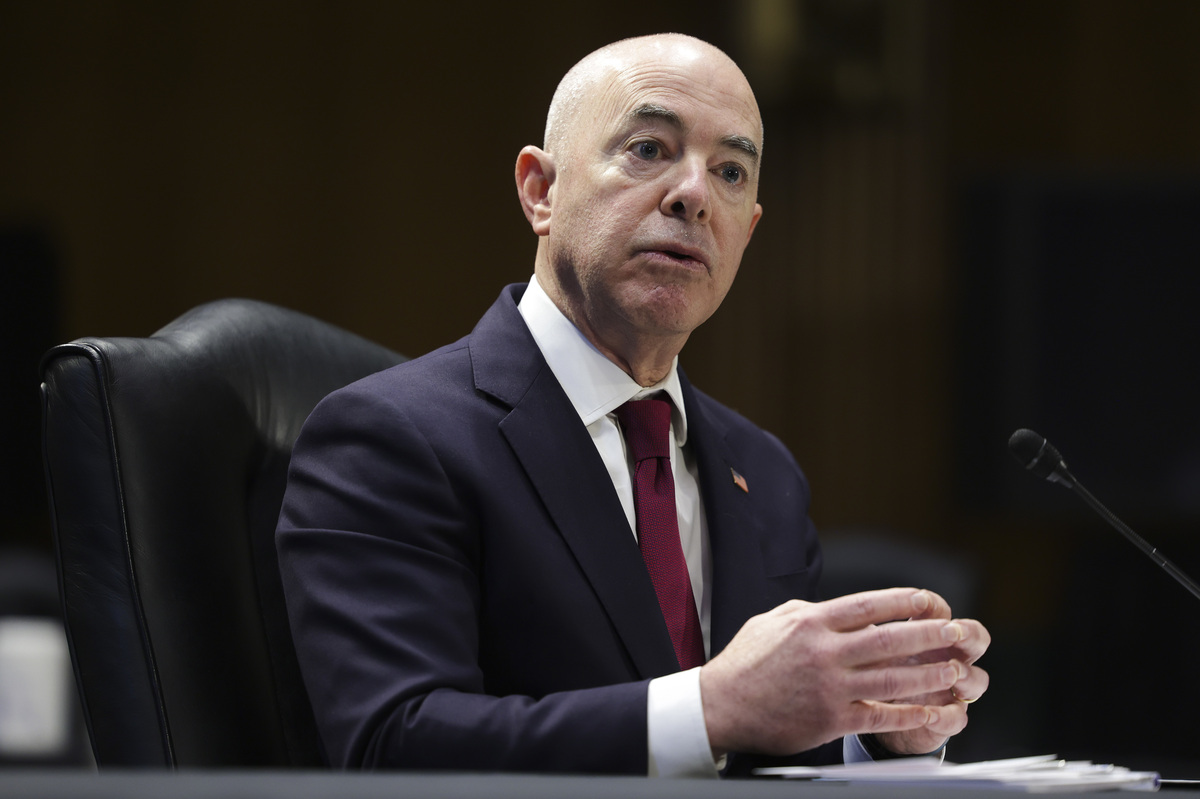
U.S. Secretary of Homeland Security Alejandro Mayorkas testifies prior to a Senate subcommittee on homeland stability on Capitol Hill on May perhaps 4.

Kevin Dietsch/Getty Photos


cover caption

toggle caption

Kevin Dietsch/Getty Photos


U.S. Secretary of Homeland Protection Alejandro Mayorkas testifies prior to a Senate subcommittee on homeland stability on Capitol Hill on May possibly 4.

Kevin Dietsch/Getty Illustrations or photos

The U.S. Supreme Courtroom will listen to arguments Tuesday in a prolonged-managing dispute over how to implement the nation’s immigration legal guidelines.

President Biden’s administration wants to established guidelines for whom immigration authorities can focus on for arrest and deportation. But a team of Republican lawyers typical sued to block the recommendations, arguing that they were preventing immigration authorities from performing their positions.

The consequence of the case could have key implications — and not just for immigration enforcement. Former Department of Homeland Protection officials and immigrant advocates say the case could hinge on the dilemma of how considerably discretion regulation enforcement companies have to choose how and when to enforce the regulation.

“A cop would not pull about every single speeder on the highway,” states Jeremy McKinney, the president of American Immigration Attorneys Affiliation. “So you have to make alternatives. All that the Biden administration was making an attempt to do was make choices, just like each individual administration ahead of it.”

It’s broadly agreed that Immigration and Customs Enforcement does not have the methods to arrest or deport all of the about 11 million people in the nation without the need of authorization. So immigration authorities have to established enforcement priorities — priorities that have swung sharply from one administration to the future.

‘Prosecutorial discretion’

In the course of former President Trump’s administration, ICE agents and officers ended up empowered to arrest and deport everyone who was living in the U.S. without having legal authorization.

“If you’re in this nation illegally and you fully commited a crime by getting into this nation, you really should be awkward,” acting ICE director Thomas Homan explained to a congressional subcommittee in 2017. “You ought to glimpse in excess of your shoulder, and you require to be anxious.”

Thomas Homan, then-acting director of U.S. Immigration and Customs Enforcement, testifies right before the Residence Homeland Protection Committee’s Border and Marine Stability subcommittee on Capitol Hill on Might 22, 2018, in Washington, D.C.

Aaron P. Bernstein/Getty Visuals


conceal caption

toggle caption

Aaron P. Bernstein/Getty Images


Thomas Homan, then-acting director of U.S. Immigration and Customs Enforcement, testifies in advance of the Household Homeland Safety Committee’s Border and Marine Safety subcommittee on Capitol Hill on Could 22, 2018, in Washington, D.C.

Aaron P. Bernstein/Getty Pictures

When the Biden administration took place of work, it place on the brakes. Instead of arresting and deporting any one they encountered who was in the region without the need of authorization, immigration authorities ended up provided a pretty unique established of priorities.

Homeland Protection Secretary Alejandro Mayorkas explained the new guidance as an training of prosecutorial discretion.

“We have guided our workforce to exercising its discretion to focus on people who pose a menace to nationwide stability, community protection and border protection,” Mayorkas told NPR in an job interview last year.

There had been formal immigration enforcement priorities at the Division of Homeland Safety prior to. In the course of previous President Obama’s administration, ICE officers and brokers were also encouraged to use prosecutorial discretion, and aim on threats to public security.

But the announcement of the Biden administration’s enforcement priorities prompted several lawsuits from immigration hardliners, who argue that this plan goes significantly further than what any past administration had accomplished.

“They went way still left on this. So it can be virtually like the Immigration and Nationality Act isn’t going to exist anymore,” mentioned Homan, the former head of ICE, during an interview last year.

Texas and Louisiana win in federal courtroom

Portion of what outraged Homan and other hardliners about the new priorities was that beneath the Biden administration’s steering, simply currently being existing in the U.S. without legal authorization “should not on your own be the foundation” for immigration authorities to arrest or deport another person.

“Expressing that somebody cannot be taken out just for the reason that they are an illegal alien is a drastic improve in our immigration law,” claims Christopher Hajec at the Immigration Reform Regulation Institute in Washington, which submitted a pal of the court brief before the Supreme Court. “It can be not within an agency’s electrical power to do that. Only Congress could do that.”

That is an argument that the states of Texas and Louisiana manufactured in court docket. A federal decide in Texas agreed, and threw out the administration’s enforcement priorities in June.

But previous DHS officials of equally parties fear about the implications of that ruling.

“Not every person can be arrested or place in proceedings,” mentioned Julie Myers Wooden, the head of ICE during the George W. Bush administration, and just one of many former DHS officials who submitted a temporary expressing their considerations to the Supreme Court.

Wooden, a former federal prosecutor, states each individual regulation enforcement agency routines discretion about how to deploy its means — and that people choices are also significant to depart up to unique subject offices.

“What you don’t want to see is a problem where a unique office environment is focusing on all noncriminal arrests basically mainly because they are easier or extra practical to the detriment of folks that have major criminal histories,” she explained in an interview.

Wooden suggests she might not have decided on the exact priorities as Secretary Mayorkas, but it is his contact to make.

If the reduced court’s ruling is upheld, immigrant advocates fear it could sign a return to the much more expansive priorities of the Trump administration.

“There was a good deal of dread in the local community at that time,” says Sarah Owings, an immigration attorney in Atlanta. “And I did see some really dreadful items.”

Owings suggests she experienced a range of clientele who had been next the direction and examining in with ICE for yrs who suddenly uncovered themselves in detention. She remembers a single person in specific whose spouse was pregnant at the time of his verify-in with ICE.

“He experienced a wife who was a superior-possibility being pregnant and a couple of months away from providing, and they ended up like, very well, he employed a phony name one time 10 decades back, so we are having you in right now,” Owings recalls. “I truly hope that we really don’t get again to that period.”